Learn why the newly expanded Film Production Tax Credit establishes Illinois as one of the most competitive production destinations in North America.
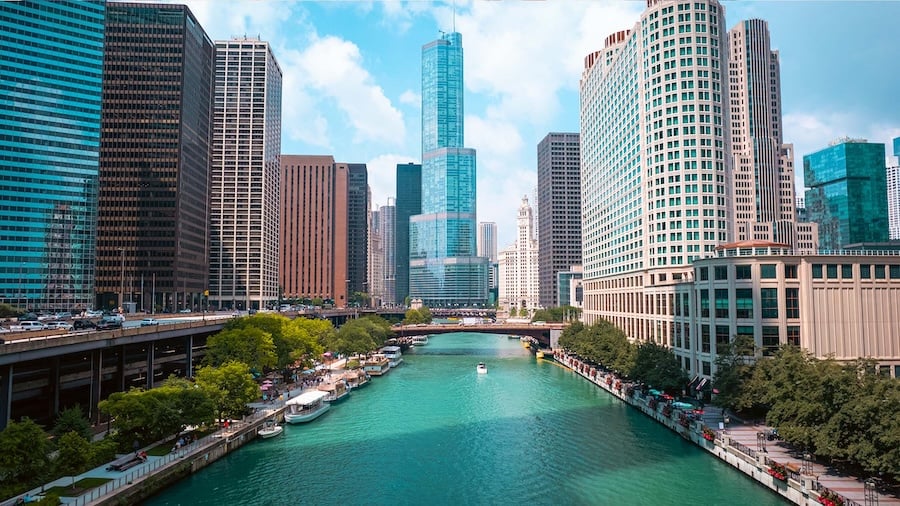
Illinois has long been a cornerstone of American cinema, dating back to the early 1900s when Chicago housed more film production companies than any other city—even before Hollywood established itself as the nation's entertainment capital.
With the passage of Senate Bill 1911, the Prairie State is experiencing a renaissance that honors its past while positioning itself a major filming destination today in the Midwest.
The recently announced 2024 production expenditures of $653 million, the second-highest total in state history, demonstrates Illinois' resilience and appeal to productions of all scales. This achievement follows the $700 million milestone set in 2022, and signals a robust recovery from the industry-wide strikes that halted production in 2023.
The economic impact of this new legislation will extend far beyond soundstages, bringing positive gains into hotels, restaurants, equipment vendors, and the state's diverse union workforce.
In this article, I’ll break down the high points of the legislation, the impact the expanded incentive will have on Illinois, and how incentive program changes like these are strengthening domestic film business in the Midwest.
Illinois' enhanced film tax credit: A game-changer for productions
The newly expanded Illinois Film Tax Credit, enhanced through Senate Bill 1911 and effective for productions commencing on or after July 1, 2025, establishes Illinois as one of the most competitive production destinations in North America.
The program offers substantial benefits for Qualified Illinois Production Spending (QIIPS) that rival—and in some cases exceed—those of traditional production hubs.
Base Illinois film credit changes:
- 35% credit on Illinois resident labor expenditures (increased from 30%).
- 35% credit on spending with Illinois-based vendors (increased from 30%).
- 30% film tax credit on wages paid to non-resident crew and talent (subject to position limitations). These include, Director, Writer, Director of Photography, Production Designer, Costume Designer, Production Accountant, VFX Supervisor, Editor, Composer, Executive Producer (capped at two), Line Producer, Associate Producer, and Post-Production Supervisor.
- New Benefit: Airfare is now a qualified production expense if purchased from an airline with its corporate headquarters domiciled in Illinois.
Stackable bonus credits: Productions can earn up to an additional 20% through stackable incentives, potentially reaching a total credit of 55% on Qualified Illinois Production Spending (credit is limited to Illinois Resident Labor):
- 15% bonus for salaries paid to Illinois residents from economically disadvantaged areas
- 5% bonus for filming outside the six-county Chicago metropolitan area (Cook, DuPage, Kane, Lake, McHenry, and Will Counties)
- 5% bonus for television series relocating their first season to Illinois
- 5% bonus green production credit for productions with certified sustainability plans
Flexibility for non-resident positions: Expanded eligibility rules allow productions to now qualify 13 non-resident crew positions of their choosing, subject to a program limitation of two (2) non-resident producers per project.
For actors, the program offers tiered eligibility based on production budgets:
- Productions under $20 million can include four non-resident actors
- Productions between $20 million to $40 million can consist of five
- Productions over $40 million can include six actors, with all limits applied per episode for a television series
No caps and long-term stability: Unlike California and New York, Illinois maintains no annual program caps and no per-project credit limits, providing crucial certainty for production planning. The program's sunset date has been extended to December 31, 2038, offering long-term stability that allows producers, studios, and networks to commit to multi-year projects with confidence.
A growing film industry means positive economic impact for Illinois
The numbers tell a compelling story: Illinois' Film Tax Credit has generated a $6.81 return on investment for every dollar spent on the incentive, resulting in over $4.5 billion in economic activity between FY17 and FY24. Notably, 94% of Illinois' current film industry economic impact is attributed to the expanded tax credit program.
This economic activity extends throughout the state's economy. Production companies support local businesses across numerous industries, including:
- Catering and restaurants
- Hotels
- Transportation services
- Equipment vendors
- Costume and prop rental houses
- Construction firms
The list goes on and on. The multiplier effect of production spending creates sustained economic benefit that reaches far beyond the immediate production timeline, supporting the livelihoods of countless individuals and the overall economic health of the state.
From Essanay Studios to modern soundstages, Illinois has a legacy of film innovation
Today, Illinois boasts world-class production infrastructure, anchored by major studio facilities that rival those of any market in North America. Leading this infrastructure is Cinespace Chicago, which features 36 active soundstages across more than 1.6 million square feet on two campuses located just 15 minutes from downtown Chicago.
As the second-largest film studio complex in North America, Cinespace has hosted more than 40 major productions and served as home to long-running series including ‘Chicago Fire,’ ‘Chicago Med,’ ‘Chicago PD,’ and numerous other network, streaming, and feature film productions. The Cinespace facilities offer comprehensive production support, including soundstages of varying sizes to accommodate productions of any scale, production offices with full connectivity, carpentry shops and paint areas, prop storage facilities, wardrobe and dressing rooms, and extensive parking for production vehicles and equipment trailers.
The studio complex has been instrumental in revitalizing Chicago's North Lawndale neighborhood, creating more than 15,000 jobs and infusing billions of dollars into the city and state economies.
Beyond Cinespace, Illinois' production infrastructure continues to expand:
- Chicago Studio City offers four soundstages totaling over 60,000 square feet, with plans to double its capacity.
- The Fields Studios is transforming a 23-acre site to house 132,000 square feet of soundstages and over 350,000 square feet of production and office space, featuring nine stages ranging from 5,000 to 18,000 square feet.
- Specialized facilities like SMASH Virtual Production Studio offer cutting-edge LED volume technology, providing productions with virtual production capabilities that complement traditional soundstage work.
Illinois offers world-class film crew and production services
Illinois's experienced film industry workforce embodies one of the state's most significant competitive advantages: the state's union crews bring decades of collective knowledge and expertise to every production. The depth of Illinois talent extends across all departments—from camera operators and gaffers to production designers, editors, and post-production specialists, including:
- IATSE Local #476
- Cinematographers Local #600
- Wardrobe Local #769
- SAG-AFTRA Chicago
- DGA
- Chicago Federation of Musicians
- Teamsters
The state's commitment to workforce development ensures this talent pipeline continues to grow. The Film and TV Workforce Training Program, launched in 2022, trains and hires over 200 individuals annually from historically underrepresented communities. Organizations like Free Spirit Media, supported by the Illinois Film Office, have significantly increased their capacity to identify, nurture, and equip the next generation of filmmakers and media professionals. If you’re currently looking for a qualified Production Assistant through this program, you can source candidates through the IFO PA Directory.
Illinois also offers a comprehensive ecosystem of production support services, including equipment rentals, post-production facilities, casting services, transportation companies, and specialized vendors.
The Chicago Film Office serves as a one-stop liaison for all City of Chicago production needs, providing permits, city services, and logistical support. With affordable permit fees, the lowest of any major domestic metro—and a film office team dedicated to facilitating smooth productions, Illinois removes traditional barriers that can complicate location filming.
The state’s geographic versatility, combined with the regional filming bonus, incentivizes productions to explore Illinois beyond the Chicago metropolitan area, bringing economic activity to communities across the state's 39 counties, 30 of which are designated as rural.
One state, a dynamic range of locations
Illinois's production slate demonstrates the state's ability to attract and support premium content across all formats. Notable recent and current productions include long-running franchises and critically acclaimed series and films:
Television Series:
- Chicago Fire, Chicago PD, and Chicago Med (NBC)
- The Bear (FX)
- Dark Matter (Apple TV+)
- The Chi (Paramount+)
- Power Book: Force (Starz)
- Monsters (Netflix)
- Somebody Somewhere (HBO Max)
- Deli Boys (Hulu)
Feature Films:
- Ghostlight (IFC)
- Love Language (3 Arts Entertainment)
- The Up and Comer and Enemies (A24)
Illinois' vision for future film industry growth
As the Illinois Film Office celebrates its 50th anniversary, state leadership remains committed to strengthening Illinois' position as a premier production destination. The recent legislative enhancements reflect a strategic understanding of what productions need: competitive financial incentives, world-class infrastructure, experienced crew, diverse locations, and long-term program stability.
Governor JB Pritzker's vision for the industry emphasizes not only attracting major productions but also investing in the future by continuing to enhance workforce development programs that increase diversity and build a qualified talent pipeline.
"Through the Film and TV Workforce Program, we have invested in the future of the industry—increasing diversity and building out a qualified pipeline of hundreds who are equipped to serve on film crews and making it possible for us to attract major productions," Governor Pritzker stated. "Our success is a testament to our hard work and partnership, as well as the undeniable charm of Illinois and our people that make us a prime creative destination."
With production infrastructure continuing to expand, a newly enhanced Illinois Film Tax Credit program extending through December 31, 2038, and a proven commitment to supporting productions of all scales, Illinois stands ready to reclaim its position as a filmmaking powerhouse. From the earliest days of Essanay Studios to today's streaming-era productions, Illinois has consistently proven that great stories can be told—and major productions can thrive—in the heart of America.
Entertainment Partners has long supported production in Illinois and continues to work closely with the Illinois Film Office, the Illinois Production Alliance, and the larger production community to maximize the benefits of the state's enhanced incentive program.
Explore our Incentives Tools to compare jurisdictions and estimate the tax incentives for your next production, or reach out to our team of team of experts to get started.
Are you planning to film your next project in Illinois – or already filming there? Tell us about it in the comments below!