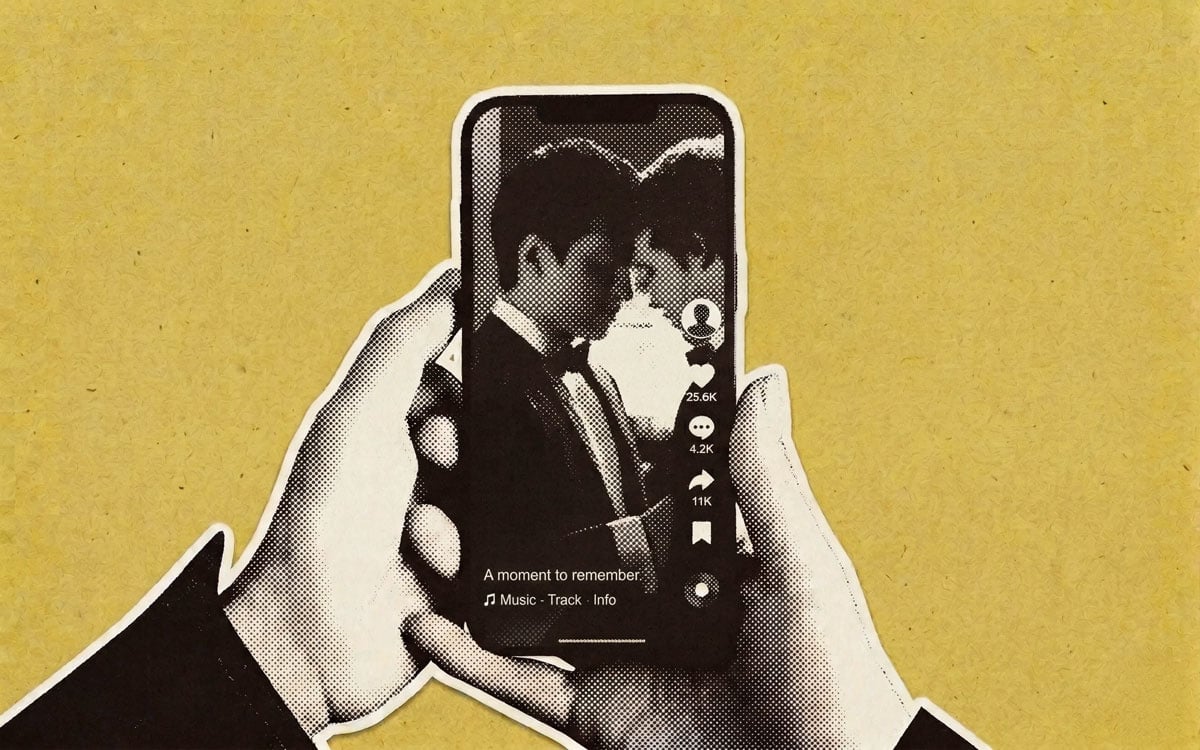
"Clipping," or paying freelance editors to cut short clips from longer content and post them across TikTok, Reels, and Shorts, has quietly scaled into a full-blown industry. You've probably seen the format: intricate edits that splice together scenes around specific characters or moments, set to trending music with filters and flashy transitions. Some recent examples of studios leaning in:
- HBO hired a fan editor full-time after her 'Heated Rivalry' edit hit 4.6M views on X. She was working in financial consulting before HBO DM’ed her.
- Last year, Lionsgate hired 15 TikTok fan editors to push clips of 'Twilight' and 'Creed.' One fan-made 'Creed' edit hit 195M views and coincided with a 29% viewership spike on Prime.
- For 'Hunger Games: Sunrise on the Reaping,' Lionsgate had fan edits ready to drop the moment the trailer launched. It's baked into the release strategy now.
- Warner Bros. used TikTok's Spotlight tool to generate 260,000+ fan videos for 'Dune: Part Two,' making TikTok the top driver to ticket sales on opening weekend.
- Disney built a TikTok content hub for 'Avatar: Fire and Ash,' then announced it would start promoting content through vertical video more broadly.
It makes sense why: an Ogilvy survey found that 86% of Gen Z identify as belonging to a fandom, and half say fandoms help them make sense of the world. Studios are just meeting them where they already are.
There's real infrastructure behind all of this now. A startup literally called Clipping generated ~$7.7M in sales in 2025 with 23,000+ editors on its roster. MrBeast launched his own clipping company, Vyro, last October. Airrack's ClipFarm lists HBO Max as a client for 'Paul American,' and Whop (a creator-focused business platform) ran a campaign seeding clips of Luc Besson's 'Dracula' on TikTok. Nearly all major music studios now use clipping services, and movie campaigns are increasingly following suit.
The appeal is obvious: it's cheap, it scales fast, and it looks organic. The catch is that studios are trading control for reach, handing their IP to freelance editors whose entire incentive is engagement. And the whole point is that the clips don't look studio-made.
